The Gatekeepers of Faith - How India’s Courts Became Theology’s Reluctant Arbiters

In 1954, a small temple in Madras found itself at the centre of a constitutional revolution. The Commissioner of Hindu Religious Endowments had sought to audit the finances of the Shirur Mutt, and the temple’s trustees objected. The Supreme Court’s response in Shirur Mutt was elegant in its deference. Religion was not merely ritual, but a matter of belief and doctrine. What was essential to a faith had to be ascertained from that faith’s own tenets. The Court, it seemed, had no desire to play theologian. It would listen to the community, not lecture it.
That promise of judicial restraint, however, would not hold. Over the next seven decades, the Essential Religious Practices (ERP) doctrine, born as a shield for religious autonomy, morphed into a sword. The question shifted from what the community believes to what the Court deems essential. In that semantic drift, the Indian judiciary quietly assumed a power that no high priest could rival: the authority to decide what a religion truly requires.
The first sign of this transformation came in 1961, in Durgah Committee, Ajmer v. Syed Hussain Ali. The Court, while ostensibly protecting the Ajmer Dargah’s management, introduced a fateful distinction. Only essential and integral practices deserved protection, while superstitious accretions could be excised. The judge was now a filter, separating the sacred from the superstitious. A year later, in Syedna Taher Saifuddin, the Court upheld the Dawoodi Bohra community’s power of excommunication as essential to the faith. This decision protected denominational autonomy but also demonstrated the Court’s willingness to recognise practices that curtailed individual rights.
Through the 1970s and 1990s, the doctrine hardened. In Seshammal (1972), the appointment of temple priests was deemed secular and therefore regulable, while rituals remained protected. This created a neat distinction that ignored how intimately priesthood and ritual are entwined in lived Hinduism. In Sri Adi Visheshwara (1997), the Court again insisted on separating secular administration from religious rituals, as if the two could be surgically divided. The message was clear: the Court would decide where religion ended and administration began.
The new millennium brought the doctrine’s most controversial applications. In the Anand Margi cases (2004), the Court rejected the Tandava dance as an essential practice, reasoning that essential elements cannot change over time. Such reasoning effectively froze a living tradition at an arbitrary moment in its history.
Then came Shayara Bano (2017). Triple Talaq was declared unconstitutional, not because it harmed women, although it did, but because the Court found that it was not essential to Islam. The reasoning was revealing. A practice that is not essential can be prohibited, with the implication that an essential practice enjoys greater protection. The ERP doctrine had become a gatekeeper, and the gate was controlled by judges.
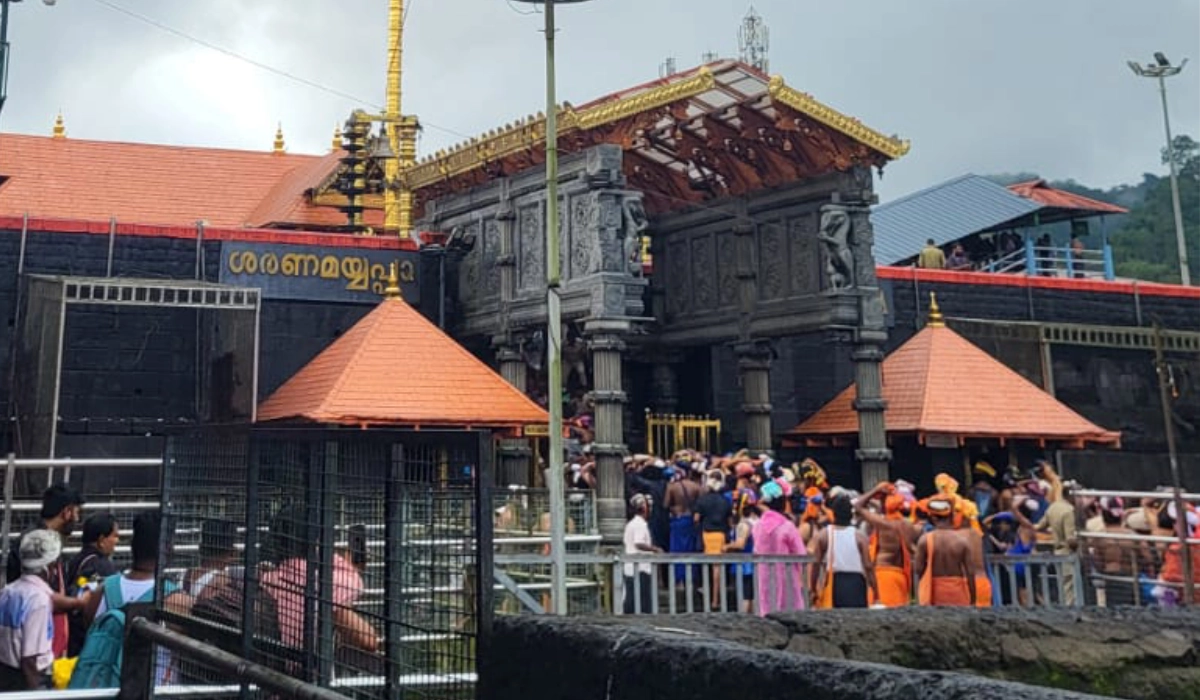
Sabarimala (2018) broke the gate open, and the resulting storm exposed the doctrine’s deepest flaw. The Court held that the exclusion of women of menstruating age was not an essential religious practice and therefore violated the principle of equality. However, the reasoning appeared circular. The practice was considered non-essential because it was discriminatory, and discriminatory because it was non-essential. A nine-judge bench is now reconsidering the entire framework, with parties across the spectrum questioning the ERP test. Senior Advocate Abhishek Manu Singhvi argued before the bench that courts must accept a community’s genuine beliefs and cannot sit in judgment over their correctness. Yet even he conceded that the Constitution’s own limitations, including public order, morality and health, already provide a framework for intervention. If that is true, why have judges spent seventy years developing a theological test of their own?
The answer lies in the doctrine’s fatal ambition. The ERP test asks judges to answer a question that is, at its core, unanswerable by secular courts: what is the essence of a religion? Scholars have argued that this inquiry lacks precedential authority and has led to the problematic transformation of secular courts into theological adjudicators.
The results have been inconsistent and troubling. In Jallikattu (2023), bull-taming was upheld not as an essential religious practice, but as a cultural right under Article 29. The Court sidestepped the ERP question entirely, implicitly acknowledging that the doctrine had become a dead end.
The cost of this doctrinal confusion is borne by the most vulnerable. The ERP framework has been criticised for marginalising minority voices, reinforcing intra-religious power hierarchies and favouring orthodox, text-based interpretations over lived and syncretic practices. When judges interpret scriptures to determine essentiality, they inevitably risk privileging the interpretations of dominant castes and male clergy over the practices of women, Dalits and folk traditions. The doctrine does not merely protect religion. It constructs it, often in the image of existing power structures.
The way forward is not to abandon the protection of religious freedom, but to abandon the pretence that judges can define its boundaries through theology. Scholars have proposed alternatives, including a harm-centred framework that invalidates practices only when they produce independent, status-affecting harm, and a structured proportionality analysis that balances individual dignity against denominational autonomy without asking what is essential.
Both approaches share a crucial insight. The constitutional question is not what is essential to a religion, but what is constitutionally permissible. The former invites judicial overreach, while the latter demands judicial restraint.
The nine-judge bench in the Sabarimala reference has reserved its judgment. Its decision will shape the contours of religious freedom for a generation. The Court has an opportunity to retire the ERP doctrine, not with a bang, but with the recognition that its time has passed. Shirur Mutt promised deference to the community, while Durgah Committee departed from that promise. The task now is to return to the Constitution’s own text, which already contains the limitations that the ERP doctrine was intended to address. Public order, morality and health are not theological categories. They are constitutional ones. Judges are competent to interpret them. They are not competent to interpret the soul of a faith.
The gatekeepers of faith should lay down their keys. The Constitution never asked them to hold them in the first place.
Works Cited
-
Primary Sources: Case Law
-
Animal Welfare Board of India v. A. Nagaraja. (2023) 7 SCC 1. Supreme Court of India.
-
Acharya Jagadishwarananda Avadhuta v. Commissioner of Police, Calcutta. (2004) 12 SCC 770. Supreme Court of India.
-
Commissioner, Hindu Religious Endowments, Madras v. Sri Lakshmindra Thirtha Swamiar of Shirur Mutt. AIR 1954 SC 282. Supreme Court of India.
-
Durgah Committee, Ajmer v. Syed Hussain Ali. AIR 1961 SC 1402. Supreme Court of India.
-
Indian Young Lawyers Association v. State of Kerala. (2019) 11 SCC 1. Supreme Court of India.
-
Sardar Syedna Taher Saifuddin Saheb v. State of Bombay. AIR 1962 SC 853. Supreme Court of India.
-
Seshammal v. State of Tamil Nadu. (1972) 2 SCC 11. Supreme Court of India.
-
Shayara Bano v. Union of India. (2017) 9 SCC 1. Supreme Court of India.
-
Sri Adi Visheshwara of Kashi Vishwanath Temple v. State of U.P. (1997) 4 SCC 606. Supreme Court of India.
-
-
Secondary Sources: Commentary, Analysis and Reports
-
Banerjee, Namrata. “Sabarimala Reference | Day 1: Union Challenges Essential Religious Practices Test.” Supreme Court Observer, 7 Apr. 2026, www.scobserver.in/reports/sabarimala-review-day-1-of-the-9-judge-constitution-bench-hearing/.
-
“Beyond Essential Religious Practices: The Role of Proportionality as the Constitutional Yardstick in Religious Freedom Disputes.” Law and Other Things, 9 Nov. 2026, https://lawandotherthings.com/beyond-essential-religious-practices-the-role-of-proportionality-as-the-constitutional-yardstick-in-religious-freedom-disputes/.
-
Gauri, Shalom. “Essential Religious Practices: Court in Review.” Supreme Court Observer, 4 May 2026, www.scobserver.in/journal/essential-religious-practices-court-in-review/.
-
“The Essential Religious Practices Test Is a Doctrine in Search of Its Own Limits.” The Indian Express, 30 Apr. 2026, https://indianexpress.com/article/opinion/columns/essential-religious-practices-test-doctrine-search-limits-sabarimala-9352345/.
-
“Essential Religious Practices Doctrine: A Threat to Religious Pluralism?” International Journal of Law Management & Humanities, vol. 6, no. 2, 2026, www.ijlmh.com/paper/essential-religious-practices-doctrine-a-threat-to-religious-pluralism/.
-
“Interpreting the Free Exercise Clause: Reflections on the Doctrine of Essential Religious Practices.” Taylor & Francis, 27 June 2025, www.taylorfrancis.com/chapters/edit/10.4324/9781003456789-2/interpreting-free-exercise-clause.
-
“Nine-Judge SC Bench Reserves Verdict in Sabarimala Reference.” Hindustan Times, 14 May 2026, www.hindustantimes.com/india-news/nine-judge-sc-bench-reserves-verdict-in-sabarimala-reference-101716987654321.html.
-
“Sabarimala Reference | Arguments Matrix.” Supreme Court Observer, 16 May 2026, www.scobserver.in/reports/sabarimala-reference-arguments-matrix/.
-
“Sabarimala Reference Hearings: A Search for Doctrinal Clarity.” NLS Repository, 26 May 2026, https://repository.nls.ac.in/sabarimala-reference-hearings/.
-
“Towards a Harm-Centred Framework: Replacing the ERP Test.” Law and Other Things, 12 Mar. 2026, https://lawandotherthings.com/towards-a-harm-centred-framework-replacing-the-erp-test/.
-

Article 21, as it lives and breathes today, is neither purely Rau’s nor purely Frankfurter’s.
Climate change, biodiversity loss, and desertification loom as a planetary crisis that raises major concern.