"You are never too small to make a difference." – Greta Thunberg
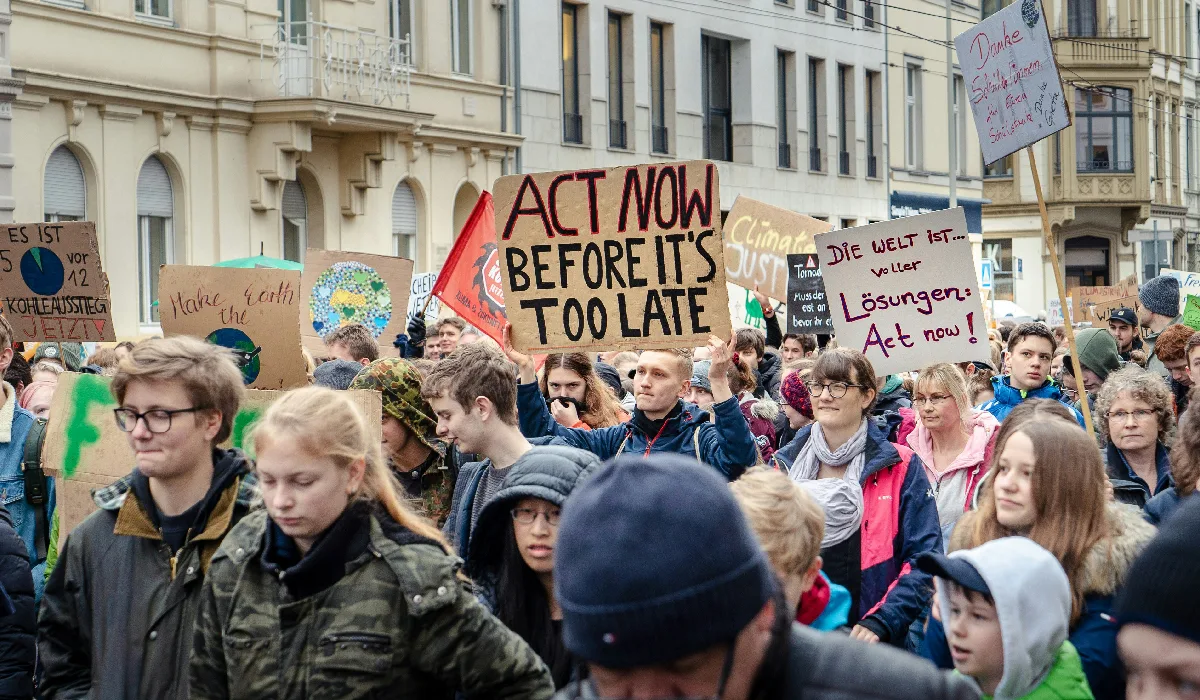
Greta was 15 when she started the protest outside the Swedish parliament in 2018, voicing her concerns on the future of our planet. Years later, this has shaped into a global movement called ‘Fridays for Future’, rallying youth voices for a more sustainable world. Youth are seen as a vibrant and energetic group, a beacon of change. Recently many nations also saw waves of change brought by youth through advocacy, campaigns, and proactive engagements.
The world observes International Youth Day on 12th August, and this year’s theme is “Different Contexts, Common Aspirations.” A sustainable future is such a common aspiration, and out of all groups, the youth stand out as a major stakeholder. Climate change, biodiversity loss, and desertification loom as a planetary crisis that raises major concern. But what are the existing initiatives at the global level to address this crisis? What are these conventions and treaties actually accomplishing? Where do youth stand in all of these policy-making decisions?
The Rio Conventions
In 1992, at the Rio Earth Summit, governments created three linked treaties designed to combat the planetary crisis Earth faces:
- UNFCCC (United Nations Framework Convention on Climate Change) – the climate treaty, tackling global warming and greenhouse gases
- CBD (Convention on Biological Diversity) – the biodiversity treaty, protecting animals, plants, and ecosystems
- UNCCD (United Nations Convention to Combat Desertification) – the desertification treaty, fighting land degradation and drought
Each treaty holds a COP, or Conference of the Parties, where the countries that signed on (called “States Parties”) meet, usually once a year (UNFCCC) or once every two years (CBD and UNCCD), to review progress, argue over targets, and sign off on new decisions. This year, all three COPs are happening together, in what’s being called a “Triple COP” year.
- UNCCD COP17 – Ulaanbaatar, Mongolia, 17 to 28 August
- CBD COP17 – Yerevan, Armenia, 19 to 30 October
- UNFCCC COP31 – Antalya, Türkiye, 9 to 20 November
What actually goes on?
The States Parties negotiate frameworks, funds, and agreements on the respective objectives of each convention.
- UNCCD COP17 (land): how countries turn “land degradation neutrality” pledges into real restoration projects, especially for regions facing drought and desertification.
- CBD COP17 (nature): progress on the Kunming-Montreal Global Biodiversity Framework (KMGBF), the 2022 agreement to halt and reverse nature loss by 2030, including whether countries are funding it properly.
- UNFCCC COP31 (climate): whether national emissions-cutting plans (NDCs) are ambitious enough, and how climate finance flows to the countries least responsible for the crisis but most exposed to it.
How young people can actually get involved
All these conventions have officially recognized youth constituencies such as GYBN (biodiversity), YOUNGO (climate), and the UNCCD Youth Caucus (land). These networks are composed of youth from around the globe, contributing at various capacities to the implementation of these conventions. Most importantly, they voice youth concerns at the policy-making level.
These networks offer capacity-building programmes for more effective advocacy, fellowships, and seed grants that support ground-level conservation initiatives. They also serve as a platform for funding opportunities and for attending dialogues and negotiations hosted by relevant international entities. As the various COPs approach, these youth networks are collating suggestions and concerns from youth around the world into a joint statement ahead of the COPs.
These conversations don’t start in COP venues, they start locally
International negotiations can feel distant until you look at what’s happening at the state level. In Kerala, the Climate Leadership Action Network (CLAN), brings together young leaders working across climate change mitigation, adaptation, and biodiversity conservation under one shared platform, rather than leaving them to work in silos. The network supports capacity-building among its members, backs ground-level projects, unite them for advocacy and campaigns on sustainability and creates a space for peer-to-peer learning.
Moreover, youth can also participate in the COPs as an observer delegates of NGOs and Civil societies, who pursue their work in the relevant fields. This Triple COP year unfolds across Mongolia, Armenia, and Türkiye, the question for young people isn’t whether these decisions affect them (they already do), but whether they’ll have a hand in shaping them. Greta Thunberg’s words hold here as much as anywhere: no one is too small to make a difference, and 2026 is asking every young person willing to try.
Relevant links:
- https://gybn.org/
- https://unfccc.int/topics/action-for-climate-empowerment-children-and-youth/youth/youngo#tab_home
- https://unccdyouthcaucus.org/
- https://www.instagram.com/climate_leaders_action_network/
image credits: https://mikabaumeister.de